Velvetkitchen.blog is a participant in the Amazon Services LLC Associates Program, an affiliate advertising program designed to provide a means for sites to earn advertising fees by advertising and linking to Amazon.com and affiliated websites.
Velvetkitchen.blog is a participant in the Amazon Services LLC Associates Program, an affiliate advertising program designed to provide a means for sites to earn advertising fees by advertising and linking to Amazon.com and affiliated websites.
The Vitamix Propel Series 750: A Technical and Performance Analysis of Next-Generation Blending
010 mins
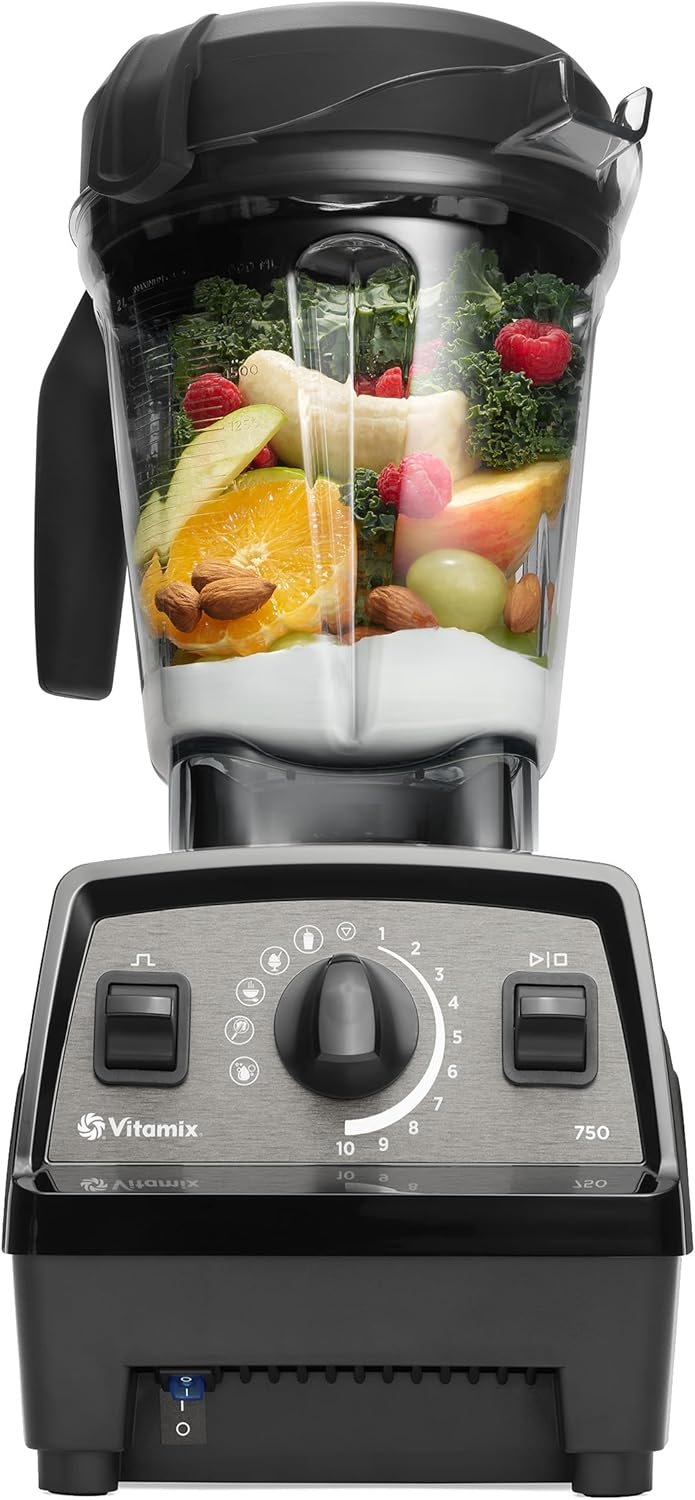
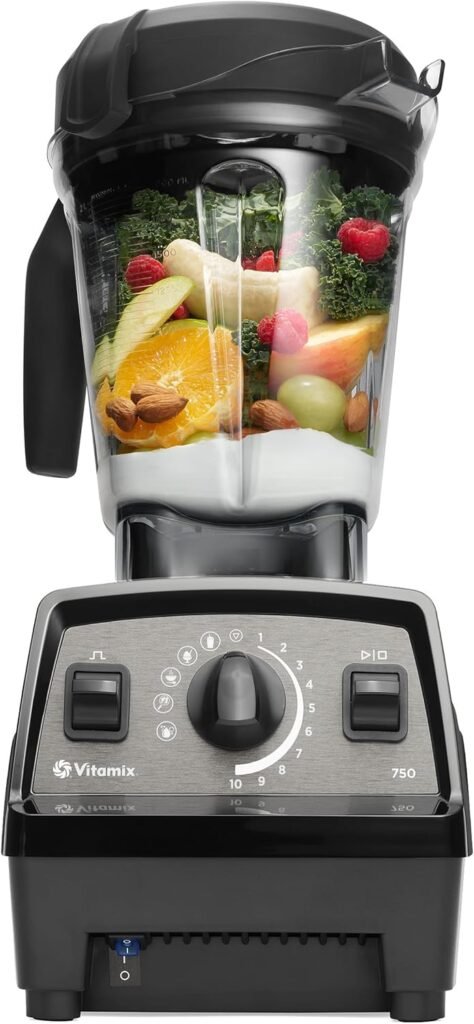
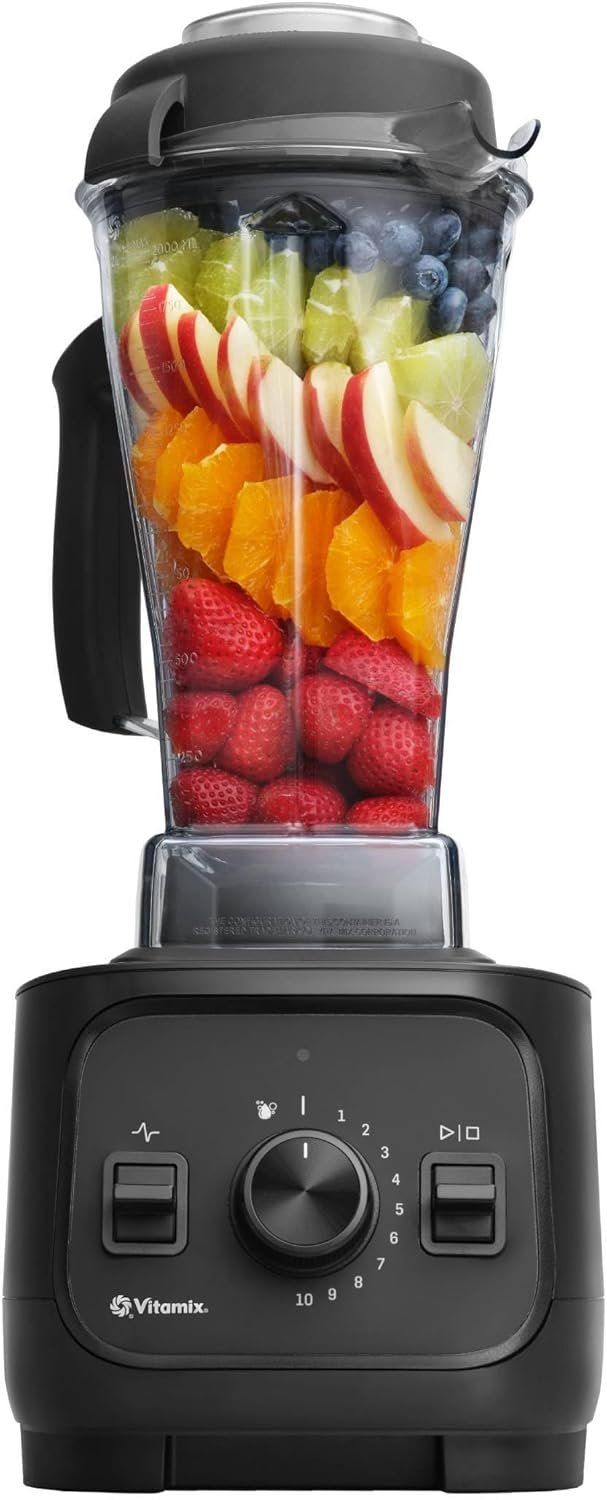
The modern kitchen has evolved from a space of manual food preparation into an environment where precise mechanics meet culinary science. Standing at the intersection of this transition is the Vitamix Propel Series 750 Professional-Grade Blender (Black).
While classic high-performance blenders established the industry baseline for sheer power, the Propel Series 750 represents a major evolutionary step: the integration of automated, micro-engineered blending algorithms with Vitamix’s commercial-grade mechanical architecture.
This comprehensive technical article explores the engineering principles, fluid dynamics, program automation, and material science behind the Propel Series 750. Rather than focusing on superficial aesthetic details, this analysis provides an objective, deep-dive examination of the machine’s components, operational performance, and maintenance parameters.
1. Technical Specifications and Architecture
To evaluate the mechanical capacity of the Propel Series 750, we must first analyze its electrical and physical specifications.
Radial cooling fan with automated thermal overload defense
2. Structural and Mechanical Engineering
The Propel Series 750 is built on a legacy of heavy-duty, commercial-grade engineering. Unlike typical kitchen blenders designed for occasional light usage, every component in this machine is designed to handle high torsional load and continuous shear strain.
The 2.2 Peak Horsepower Motor
The primary driver of the Propel Series 750 is a high-efficiency universal motor capable of generating 2.2 peak horsepower.
Power Conversion: Operating at 120 Volts and drawing approximately 12 Amps, the motor converts electrical energy into kinetic energy with high efficiency. The resulting rotational speed of the blade tips reaches up to 270 miles per hour ($120.7\text{ m/s}$), allowing the machine to break down plant cell walls and pulverize dense crystalline materials like ice.
Torsional Load Management: The motor is engineered to maintain constant rotational speed even when processing highly viscous loads (such as heavy doughs or nut butters). An electronic speed controller constantly monitors feedback from the drive shaft, adjusting voltage intake to prevent bogging or speed drops under load.
Thermal Mitigation: High-speed electric motors generate significant waste heat. The Propel 750 features an integrated radial cooling fan that pulls air through a low-profile intake and channels it directly around the motor housing before expelling it through rear exhaust ports. If the internal temperature exceeds a critical safe limit, an automated thermal shut-off circuit engages to protect the stator windings from electrical failure.
       [ Air Intake ] ---> [ Radial Fan ] ---> [ Motor Stator ] ---> [ Hot Exhaust ]
                                                      |
                                           [ Thermal Sensor Auto-Shutoff ]
Metal-on-Metal Couplings
A common failure point in consumer-grade blending appliances is the coupling mechanism between the motor base and the blade assembly. Many standard kitchen blenders utilize hard plastic or rubber gears that degrade, strip, or melt under high resistance.
The Propel Series 750 uses a metal-to-metal coupling system:
The motor drive shaft features a machined zinc-alloy gear.
The matching drive socket on the underside of the container is constructed from hardened steel.
This direct metal connection prevents wear, eliminates physical slippage, and ensures that the full torque of the 2.2 HP motor is delivered to the blade assembly.
3. Container Fluid Dynamics: Low-Profile vs. Standard
One of the most notable design features of the Propel Series 750 is its 64-ounce low-profile container.
The low-profile container has a wider, square base compared to the older, tall classic containers. This wider base accommodates a larger 4-inch blade assembly (compared to the 3-inch blades used in tall containers).
The Pull-Down Vortex: The shape of the container walls works with the speed of the blades to generate a specific fluid dynamic loop. When liquid or semi-solid ingredients are spun, they are driven up the sides of the container by centrifugal force. The unique tapered corners of the square profile break this radial motion, directing the food back downward into the center of the spinning blades.
Reduced Cavitation: Cavitation occurs when an air pocket forms around a blender’s blades, causing them to spin freely without contacting the food. The wider base of the low-profile container reduces the frequency of cavitation, especially during large-volume blends, as gravity and the wide footprint work together to keep ingredients in direct contact with the blade surface.
Under-Cabinet Clearance: While the performance benefits of the wide container are significant, there is also a practical engineering advantage. At just 18 inches tall when resting on the base, the Propel 750 fits easily underneath standard kitchen cabinet clearances (which are typically 18 inches from countertop to cabinet bottom). This allows for convenient countertop storage without requiring the user to store the base and container separately.
4. Automation and Program Algorithms
The “Propel” designation highlights the blender’s pre-programmed, hands-free operation. While manual speed control is still a core feature, the Propel Series 750 includes four distinct, micro-controlled program settings that adjust speed, duration, and blade direction profiles automatically.
                  [ 10-Speed Manual Dial ]
                             |
   +-------------------------+-------------------------+
   |                                                   |
   v                                                   v
[ 4 Pre-Set Programs ]                      [ Pulse Trigger Switch ]
   ├── Smoothie                                (Instant Burst of Speed)
   ├── Hot Soup
   ├── Frozen Dessert
   └── Dip & Spread
The Four Automated Program Profiles
1. Smoothie Program (45 Seconds)
Design Goal: To create a smooth emulsion from a mixture of soft fruits, fibrous vegetables, ice, and liquids.
Algorithm Profile: The program begins at a lower speed to gently crush large frozen chunks and pull leafy greens down into the blade path. It then steadily ramps up to maximum speed, holding a high-RPM cycle to break down cellulose and seeds into a consistent, silky emulsion.
2. Hot Soup Program (5 Minutes, 45 Seconds)
Design Goal: To liquefy raw vegetables, aromatics, and liquids while simultaneously heating them to serving temperatures using kinetic friction.
Algorithm Profile: This is the longest automated cycle. The blender maintains maximum speed for the majority of the duration. Because the container has no heating element, the heat is generated entirely by the friction of the 4-inch steel blades shearing through the liquid.
Friction Formula: The heat generated ($Q$) over time ($t$) by kinetic friction in a viscous fluid is directly proportional to the blade speed ($\omega$) and fluid viscosity ($\mu$):
$$Q \propto \mu \cdot \omega^2 \cdot t$$
Running this program for nearly six minutes raises the temperature of room-temperature liquids to approximately $170^\circ\text{F}$ ($77^\circ\text{C}$).
3. Frozen Dessert Program (55 Seconds)
Design Goal: To process extremely thick, frozen ingredients (like solid ice blocks, frozen berries, and cream) into soft-serve consistency without melting the mixture.
Algorithm Profile: This program uses varied pulses and step-down speeds to keep the frozen mass moving. Because frozen mixtures are highly viscous and prone to cavitation, the program works in tandem with the user operating the included low-profile tamper to push dense ingredients directly back into the cutting zone.
4. Dip & Spread Program (60 Seconds)
Design Goal: To process thick, sticky, or low-moisture ingredients (such as hummus, salsa, pestos, or nut butters) that require controlled chopping rather than pure liquefication.
Algorithm Profile: This setting utilizes alternating high and low speeds. The lower speed cycles allow ingredients to fall back down onto the blades, while the brief high-speed cycles chop and emulsify without over-processing the mixture into a complete puree.
5. Manual Tactile Controls
For recipes that require fine, custom control over texture, the Propel Series 750 features manual analog controls alongside its automated programs.
Variable Speed Dial (1 to 10): The center dial allows step-free control of the motor speed. Setting 1 operates at low RPMs, ideal for gently stirring air out of mixtures or performing a coarse chop on vegetables. Setting 10 utilizes the full power of the motor, designed for pureeing, pulverizing, and milling.
Dedicated Pulse Switch: Located on the left side of the control interface, the Pulse switch provides a short, immediate burst of the speed selected on the dial. This is useful for quickly incorporating ingredients at the end of a blend or layering coarse, chopped textures on top of a smooth puree (e.g., adding chunky tomatoes to a smooth salsa base).
On/Off Toggle Switch: Located on the right side of the control panel, this physical switch serves as the master power control, ensuring the motor will not accidentally activate when the container is being placed or removed.
6. Comprehensive Culinary Applications
The high-torque motor and specialized blade geometry allow the Propel Series 750 to perform a wide variety of kitchen tasks, making it a highly versatile food processing tool.
Emulsifications and Purees
Creating stable emulsions (such as homemade mayonnaise, hollandaise, or vinaigrettes) requires breaking down fat droplets into micro-particles. The high shear rate of the 4-inch blades breaks down fats and distributes them evenly within liquids, resulting in highly stable, creamy emulsions that resist separating over time.
Dry Milling and Grinding
The dry-milling capability of the Propel 750 is highly efficient. Hard grains, seeds, and spices can be processed into fine powders:
Grains to Flour: Whole wheat berries, rice, or oats can be ground into fine flour in under 60 seconds.
Spice Pulverization: Tough bark spices, dried chilies, and hard peppercorns are quickly reduced to uniform powders.
Coffee Grinding: Allows the user to select precise coarseness levels for French press, drip, or espresso grinds by utilizing low speed settings and the pulse switch.
Dough Kneading
Though primarily used as a wet processor, the low-profile container can also handle dry dough mixtures. By utilizing the manual speed dial and the pulse switch at low speeds (Variable Speeds 1-3), the blades can quickly cut butter into flour for pastries or knead yeast doughs for bread and pizza.
7. Materials and Cleaning Science
Durability and hygiene are major considerations for food contact surfaces. The construction of the Propel Series 750 reflects careful material selection and simple cleaning design.
Eastman Tritan® Copolyester
The 64-ounce container is made from Eastman Tritan®, a premium copolyester that offers several distinct advantages over standard polycarbonate or glass:
High Impact Resistance: Unlike glass, Tritan is highly resistant to shattering, making it safe when processing hard ingredients like ice or frozen bones.
Chemical Resistance: It does not degrade or leach endocrine-disrupting chemicals (such as BPA or BPS) into foods, even when exposed to high heat (up to boiling temperatures) or highly acidic liquids.
Stain and Odor Resistance: The non-porous polymer structure prevents garlic, onions, or spices from leaving lingering odors or stains on the container walls.
The Self-Cleaning Program
Rather than requiring manual disassembly of the blade unit—which can wear out seals and present a safety risk—the Propel Series 750 features a dedicated Self-Cleaning Program built directly into the control dial.
The high-speed turbulence of this automated cycle forces soapy water into the spaces beneath the blades and along the container walls, removing food residue in under a minute. Once complete, a quick rinse with clean water prepares the container for its next use. Additionally, both the container and the two-piece lid are rated as dishwasher-safe for added convenience.
8. Summary of Advantages and Technical Considerations
To provide a clear, balanced overview of the Vitamix Propel Series 750, we can break down its main benefits and operational considerations:
Advantages
Optimized Power: The 2.2-HP motor easily handles tough, fibrous, and frozen ingredients.
Under-Cabinet Storage: The low-profile 64-ounce container fits under most standard kitchen cabinets.
Hands-Free Automation: Four pre-set program cycles make consistent blending quick and simple.
Robust Drive Train: Metal-to-metal couplings between the base and container ensure long-term durability.
Friction Cooking: Capable of preparing hot, steaming soups entirely in the container.
Easy Maintenance: Dedicated self-cleaning program and dishwasher-safe components.
Technical Considerations
Acoustic Level: Generating 2.2 peak horsepower at high RPMs produces a noticeable level of noise, which is common among commercial-grade blenders.
Requires Proper Liquid Ratios: The wide, low-profile base requires a minimum volume of liquid/solid ingredients (typically around 1 to 1.5 cups) to maintain a proper blending vortex, meaning very small batches can sometimes be harder to process.
Substantial Footprint: At 10 pounds and with a 7.5 x 9.0-inch footprint, it requires a dedicated space on the countertop or in pantry storage.
9. Final Technical Evaluation
The Vitamix Propel Series 750 (Black) is an excellent fusion of mechanical durability and modern convenience. By pairing a powerful 2.2 HP motor and solid metal drive system with smart, automated blending programs, it offers a highly versatile tool for both culinary professionals and home cooks.
The low-profile 64-ounce container balances high capacity with kitchen-friendly storage, and the simple self-cleaning cycle ensures convenient daily maintenance. For those looking for a versatile, long-term culinary workhorse, the Propel Series 750 delivers consistent, professional performance across a wide range of kitchen tasks.
 1
1